


 The French directory of specialty vape shops that are independent of the tobacco industry

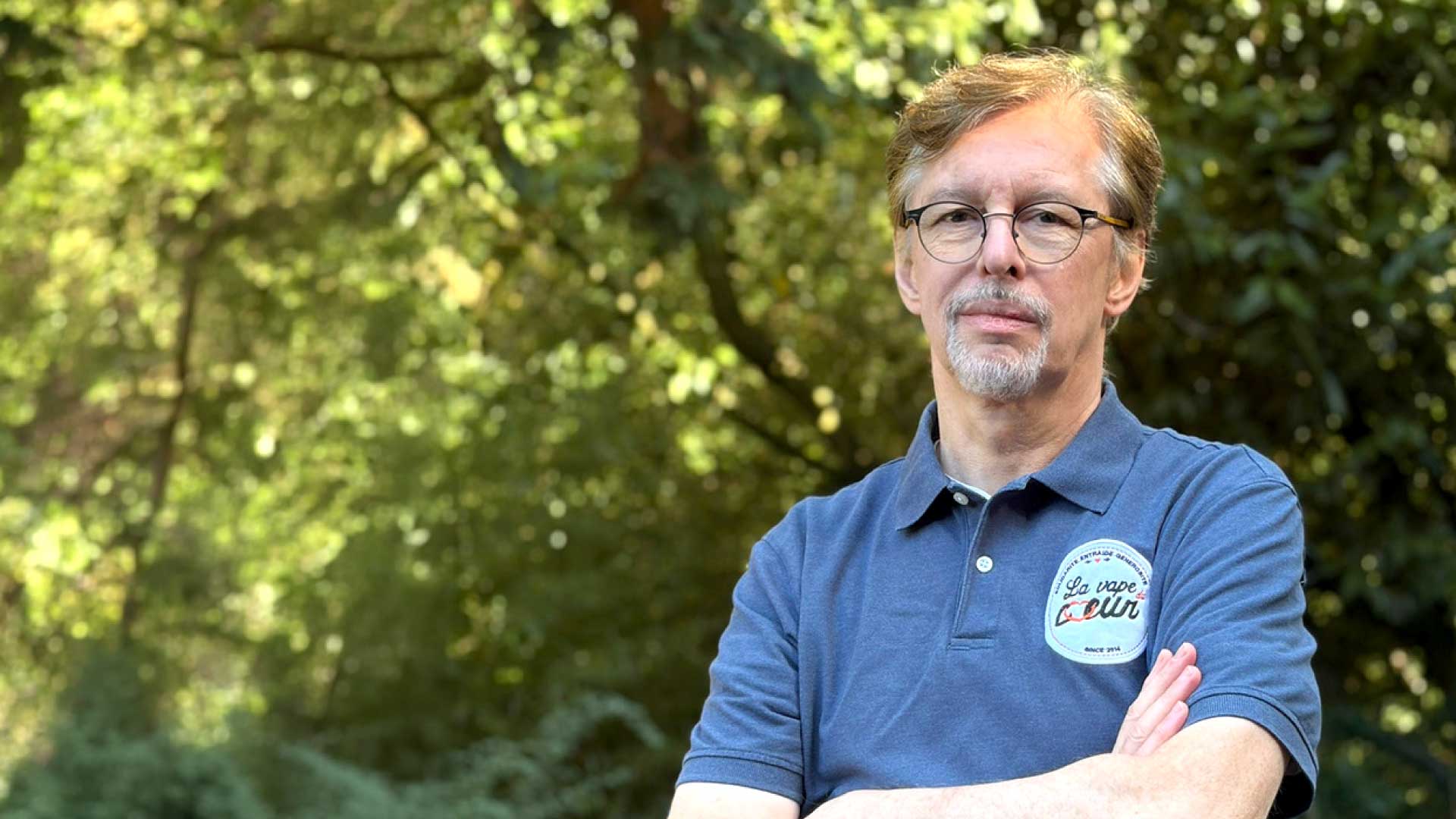
“Our mission is to help people in vulnerable situations quit smoking through vaping, given that smoking rates are particularly high in disadvantaged communities.”
Founded in 2014, La Vape du Cœur is a French nonprofit organization working to combat smoking among the most vulnerable populations. It collects vaping equipment and e-liquids donated by industry professionals to redistribute them free of charge. Its efforts are primarily directed at adults facing social or financial hardship, as well as individuals hospitalized in psychiatric facilities or incarcerated. In partnership with medical facilities and social workers, the organization supports smoking cessation by offering an alternative to traditional cigarettes. Thanks to volunteer work and the solidarity of the vaping community, the association reduces inequalities in access to preventive healthcare. It thus serves as a concrete means of mutual aid, combining harm reduction with social support. Interview with Serge Le Faurestier, executive assistant at La Vape du Cœur.
How did the organization La Vape du Cœur get started?
Serge Le Faurestier: It started out as a Facebook group created in 2014 by Hichem Abdel. He noticed that many vapers wanted to get rid of their old equipment—which still worked—while others couldn’t afford to buy a kit to help them quit smoking. He thought it would be a good idea to connect them, with the goal of promoting recycling and creating a virtuous cycle, inspired by the Restos du Cœur. It was so successful that managing the group quickly became too complicated. So, the nonprofit organization La Vape du Cœur was officially founded in 2015.
How did the organization develop from there?
SLF: Hichem handed the reins to Julien Le Vaillant (now with FUU), who took over as president. Very soon, in 2015, the first partnerships were formed with organizations such as Les Petits Frères des Pauvres and Notre-Dame des Sans-Abris. We then established a relationship with RESPADD (Network of Healthcare Facilities for Addiction Prevention). In late 2016, along with Stéphane Papathéodorou, we joined the project as volunteers. During the “ Mois Sans Tabac ” in November 2016, we led about thirty workshops at CSAPAs, CAARUDs, and CHRSs in the Île-de-France region. In 2019, Xavier Guillou became president, bringing with him additional projects, particularly those focused on smoking cessation in prisons. The organization grew so much that it became necessary to hire full-time staff to manage coordination and logistics at the warehouse in Normandy.
In practical terms, how does the assistance provided by the organization work?
SLF: Our mission is to help people in vulnerable situations quit smoking through vaping, given that smoking rates are particularly high in disadvantaged communities. Today, direct assistance to individuals accounts for only 0.5% of our activities. Everything else is channeled through the medical-social network: we work with hundreds of partner organizations.
Where do the equipment and e-liquids you resell come from?
SLF: They come from donations made by vaping professionals: wholesalers, manufacturers (such as VDLV, Alfaliquid, Le Petit Vapoteur, ADNS, Flavor Hit…), and sometimes independent shops or device manufacturers. I’m clarifying this because it’s truly important: we refuse any donations from companies affiliated with the tobacco industry, as this would be completely incompatible with any partnership or collaboration with healthcare organizations!
FIVAPE: Partner and Supporter of La Vape du Cœur
FIVAPE encourages its members and all vaping professionals to support La Vape du Cœur in its grassroots efforts to help the most disadvantaged and vulnerable populations—who are the primary victims of tobacco use. All La Vape du Cœur partner stores, whether or not they are FIVAPE members, can be found in the vape.fr directory.
What criteria must donations of equipment and liquids meet?
SLF: Professionals fill out a form listing the items they wish to donate. We conduct a rigorous screening process before accepting the pallets at the warehouse. For equipment, we prioritize easy-to-use starter kits. For liquid e , we refuse flavors reminiscent of alcohol (mojito, rum, etc.) because the clientele—particularly in CAARUD centers—often has multiple addictions. We also limit 0 mg/ml products, which are of little use during withdrawal, as well as large-format e-liquids requiring boosters, which are too complex to prepare in treatment facilities or psychiatric settings. We accept bottles up to one year past their Best Before Date (DDM).
How do healthcare facilities receive this equipment?
SLF: They place their orders on our website. Each participating organization is entitled to 3 packages per year, each containing:
- 25 complete weaning kits;
- Between 300 and 500 vials of liquid.
This amounts to 75 kits and approximately 1,000 vials per year per facility. We simply ask for a contribution toward shipping costs (€85 for a mixed package weighing 20 kg, €45 for a package containing only e-liquids). Donations made by professionals, meanwhile, are 66% tax-deductible.
Do you still interact directly with users?
SLF: Much less than at the beginning. Today, healthcare professionals in the field have taken over and are handling distribution to their patients. To support them, signing the agreement entitles them to a two-hour initial training session via videoconference—and sometimes in person—to explain the technical aspects of vaping and the basics of smoking cessation using this tool. In addition, after each package is received, we can offer them a 30-minute workshop to explain specifically how the equipment works (refilling, changing coils, adjustments). Xavier also participates in more institutional training sessions, notably a two-day training program organized once a year by the Addiction Federation.
Have you received any feedback on the effectiveness of your efforts with users?
SLF: It is very difficult to conduct rigorous cohort- Studies , because the population living in precarious circumstances is highly volatile. However, feedback from healthcare professionals has been very positive. The observed figures are consistent with data from the Cochrane Review: vaping is effective, particularly when used in combination with other replacement therapies. The financial factor (the price of a pack of cigarettes) remains the primary motivator for quitting, and the opportunity to try out appropriate equipment for free removes a major barrier.
What are the main challenges facing La Vape du Cœur today?
SLF: If regulatory or tax changes were to treat vaping as equivalent to traditional tobacco for tax and legal purposes, this would pose a critical problem. It is strictly prohibited by law to receive or make donations of tobacco products. If vaping were treated as equivalent to tobacco, a healthcare facility would no longer be permitted by regulation to distribute it, and our association would have to cease its activities. Despite the lack of support—and even the obstacles imposed by official guidelines during campaigns such as “ Mois Sans Tabac ”—we observe on the ground that healthcare professionals, tobacco specialists, and addiction specialists remain convinced of the benefits of vaping and continue to rely on our efforts.
A network covering all of France
La Vape du Cœur has formed partnerships with nearly 300 organizations throughout France, including the following:
- Medical and social service facilities: 40
- Organizations specializing in addiction treatment: 50
- Center for Reception and Support for Harm Reduction for Drug Users (CAARUD): 42
- Hospitals, University Hospitals, Long-Term Care Facilities, and Clinics: 40
- Therapeutic communities: 3
- Center for Addiction Treatment, Support, and Prevention (CSAPA): 112
- Addiction Liaison and Care Teams (ELSA): 1
- Acute Care Beds (LHSS): 8